Western Art History Unit Plan: African Art (500 BC – 200 AD)
Unit Title
Ancient African Art and Early Civilizations
Grade Level
High School Art History / Western Art History
Lesson Objective
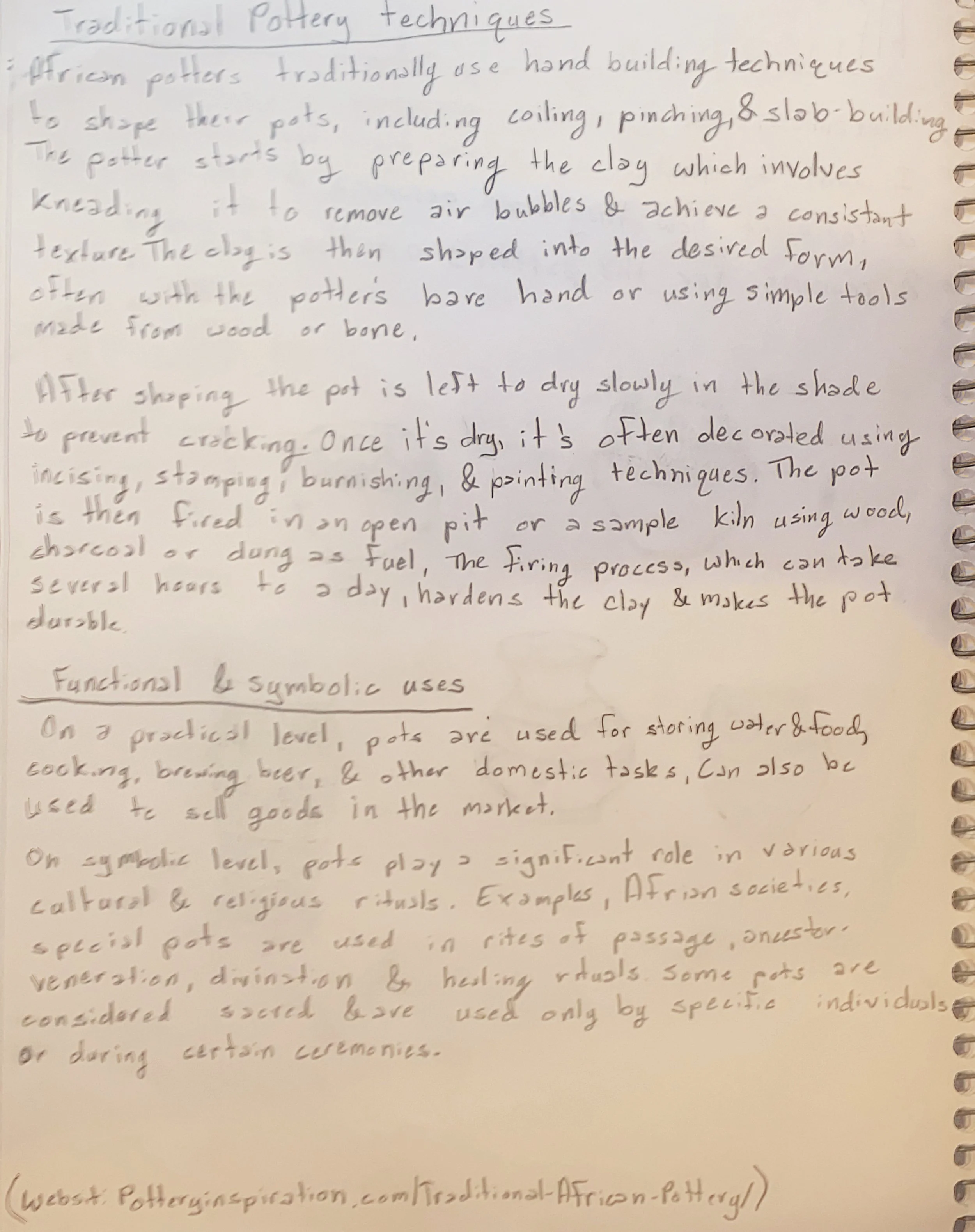
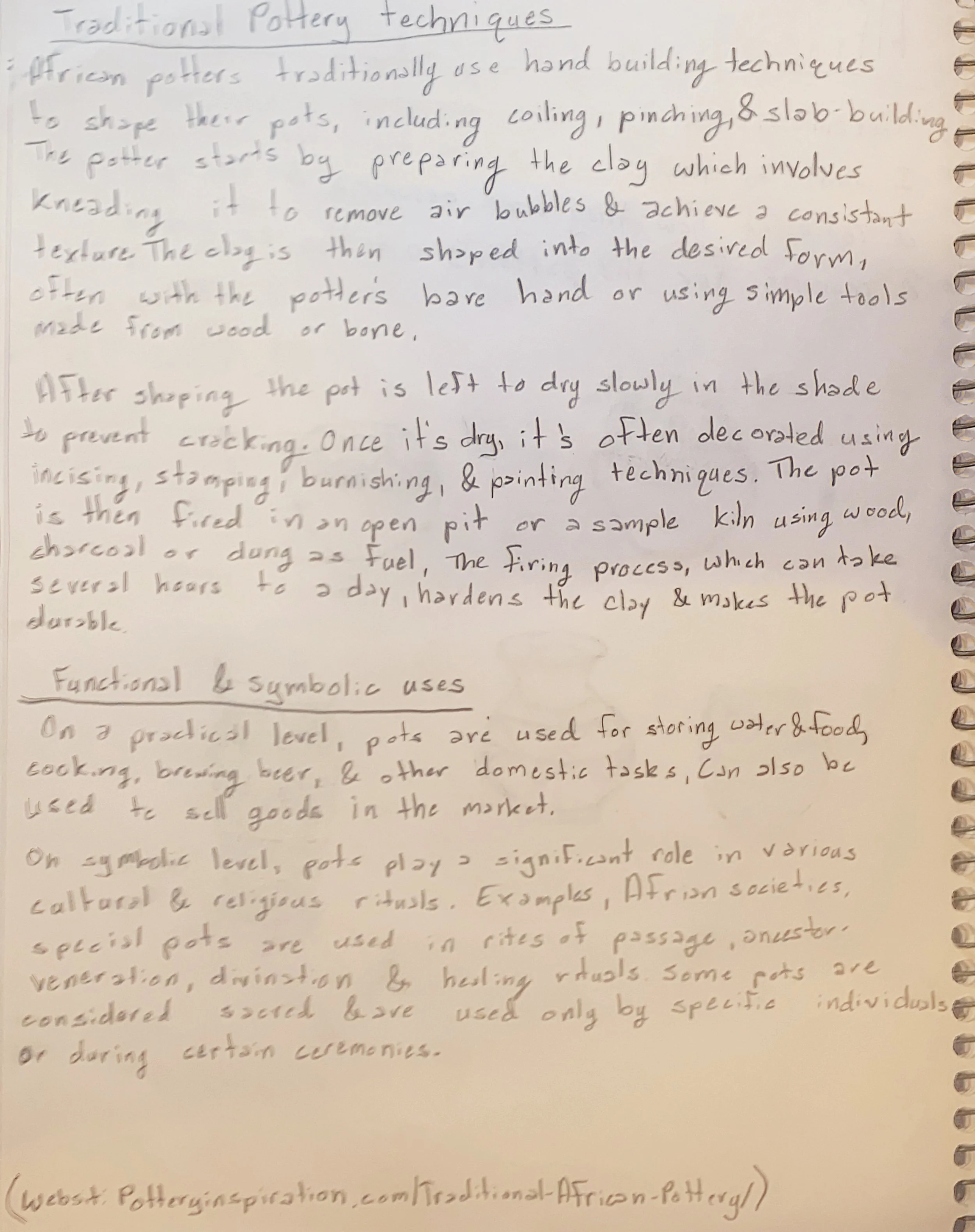
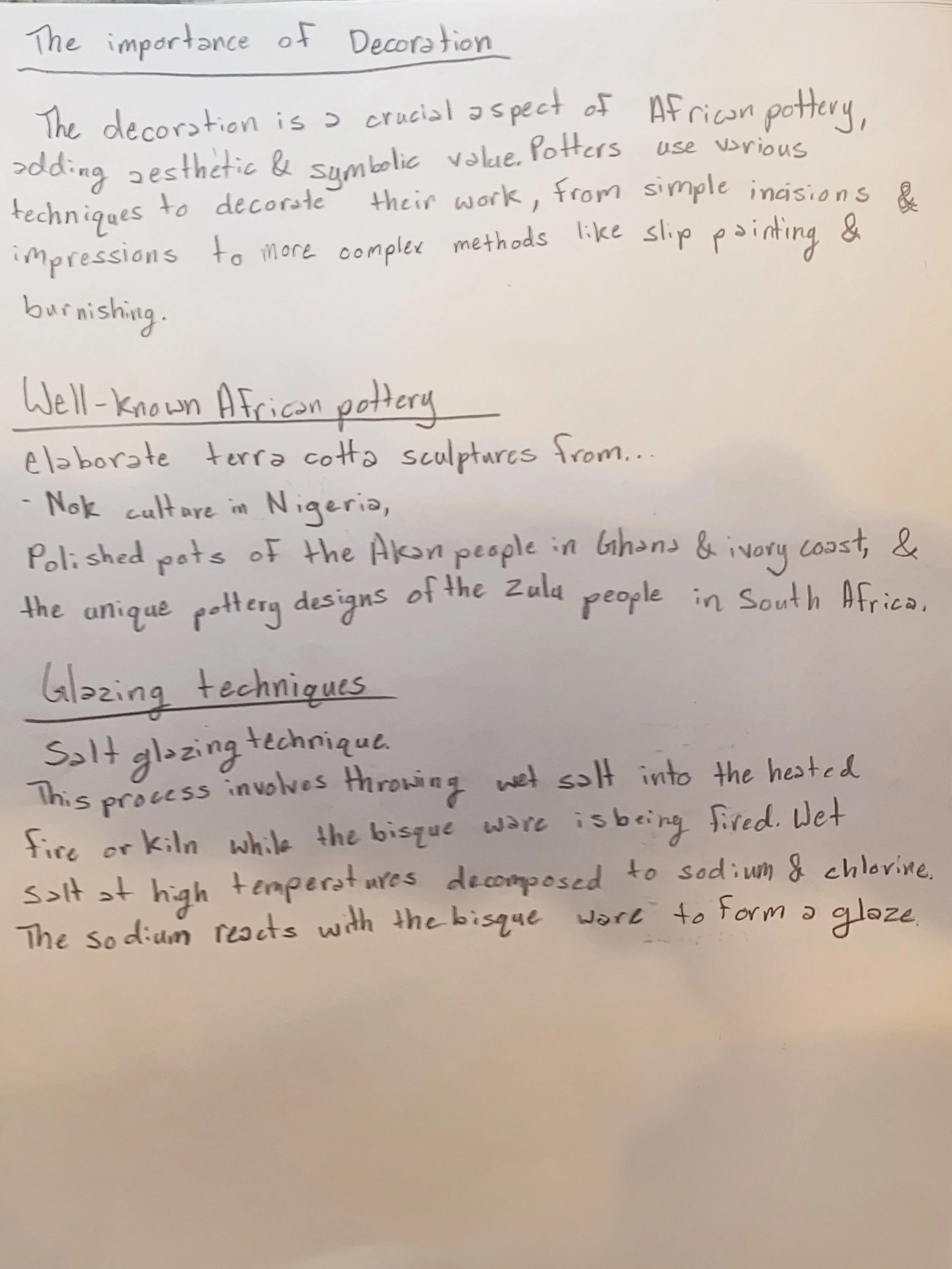
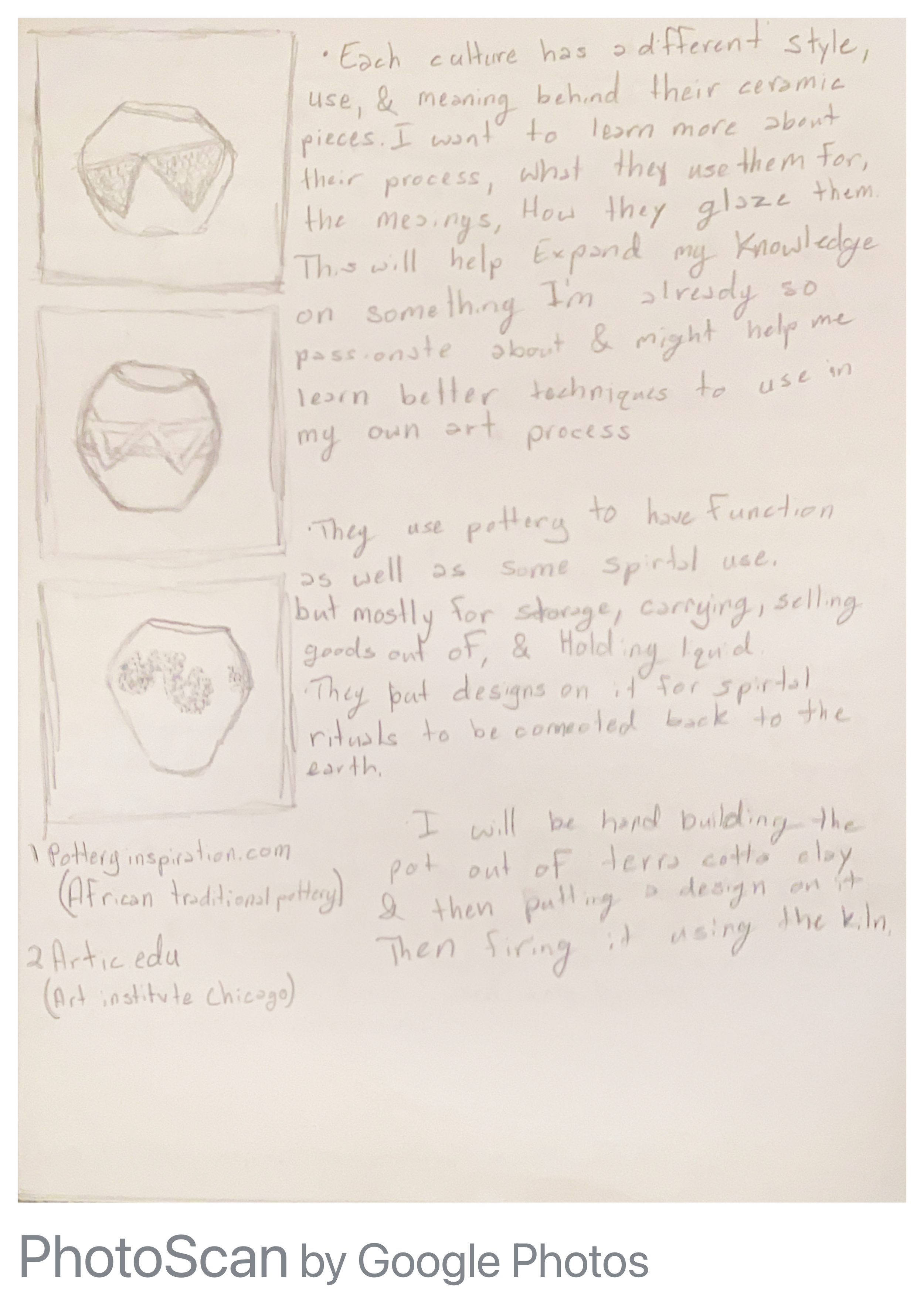
Students will explore African art and civilizations from 500 BC to 200 AD through note-taking, sketchbook journaling, observational drawing, and creative projects. Students will analyze how art reflected religion, leadership, storytelling, and culture within early African societies while documenting their learning visually and through written reflection.
This unit plan is designed to be completed over the course of 10 days. The first week will focus on lectures, discussions, and learning about the historical time period and its significant artworks. During the second week, students will create a project inspired by one of the art pieces studied throughout the unit, allowing them to apply their understanding through a hands-on creative experience.
Essential Questions
How did ancient African civilizations use art to communicate ideas and beliefs?
What artistic techniques and materials were used in African art from 500 BC–200 AD?
How can sketchbook journaling help us better understand art history?
Why is African art important within world and Western art history?
Materials
Sketchbooks or journals
Pencils and erasers
Colored pencils or markers
Presentation slides or printed images of African artwork
Clay, paper, or mixed media supplies for mini projects
Projector or smartboard
Lesson Introduction
This unit introduces students to African art and early African civilizations between 500 BC and 200 AD, with a focus on the Nok civilization and early sculptural traditions. Students will study terracotta sculptures, pottery, symbolic carvings, and ceremonial artwork while learning how African art reflected cultural identity, spirituality, and leadership.
Throughout the unit, students will maintain an art history sketchbook journal where they will:
Take notes during lectures and discussions
Draw images and artworks connected to each lesson
Reflect on artistic styles and symbolism
Record important vocabulary and historical information
Students will also complete one mini art project inspired by each time period or culture studied throughout the unit.
Historical Background
One of the most important civilizations studied in this lesson is the Nok civilization of present-day Nigeria. The Nok people are known for their expressive terracotta sculptures featuring stylized faces, geometric designs, and detailed textures.
Ancient African artists also created:
Pottery and ceramics
Metalwork and jewelry
Religious and ceremonial sculptures
Symbolic carvings representing status and identity
These artistic traditions demonstrate the creativity, craftsmanship, and technological advancement of early African societies.
Key Vocabulary
Terracotta – clay fired in a kiln
Sculpture – three-dimensional artwork
Symbolism – using images or objects to represent ideas
Ceremonial Art – artwork used in rituals or religious practices
Stylization – simplifying or exaggerating artistic features
Relief – sculpture attached to a flat surface
Student Activities
1. Sketchbook Journaling and Notes
Students will use sketchbooks throughout the unit to:
Take organized notes during lectures
Record important dates, vocabulary, and historical information
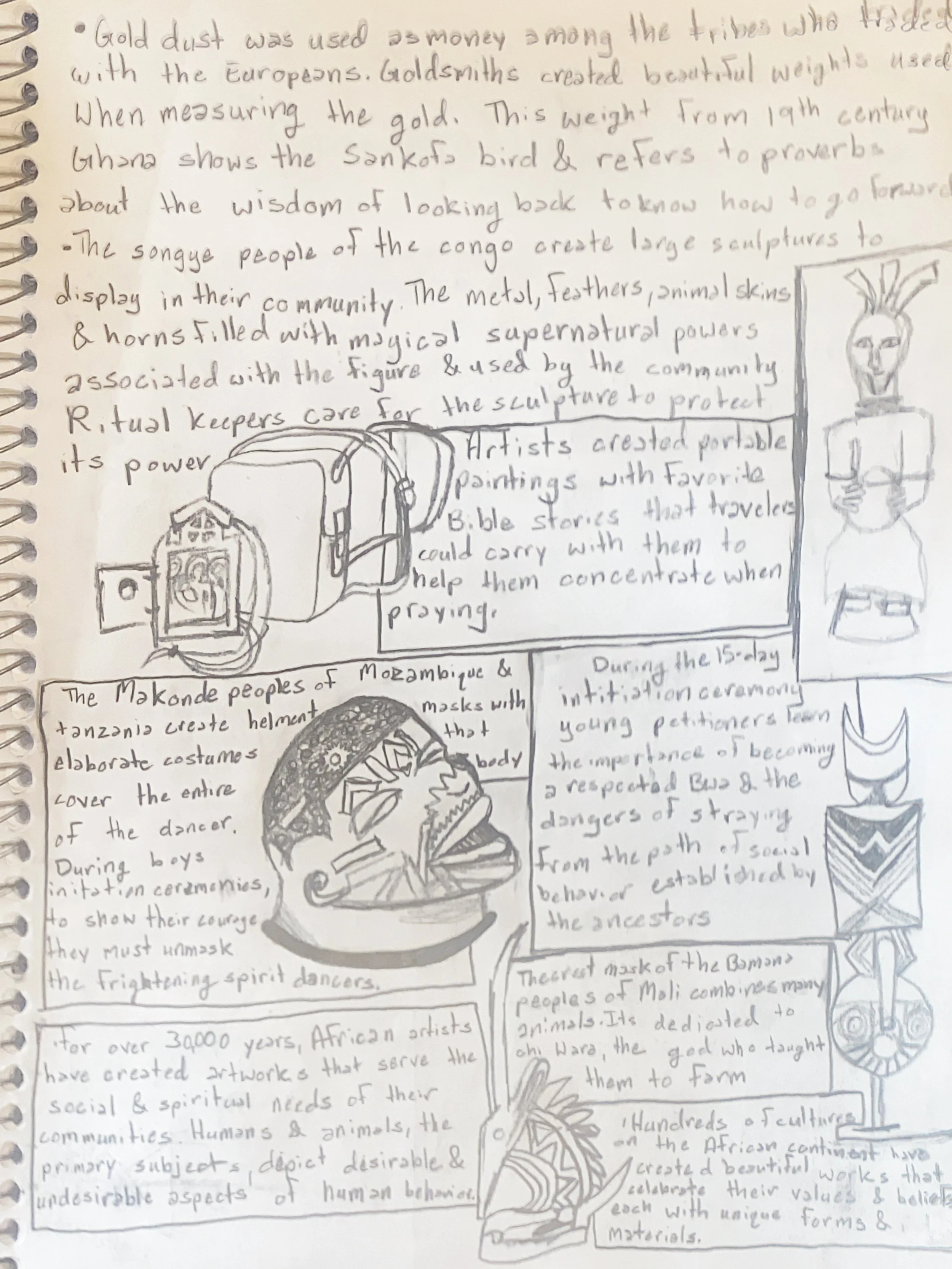
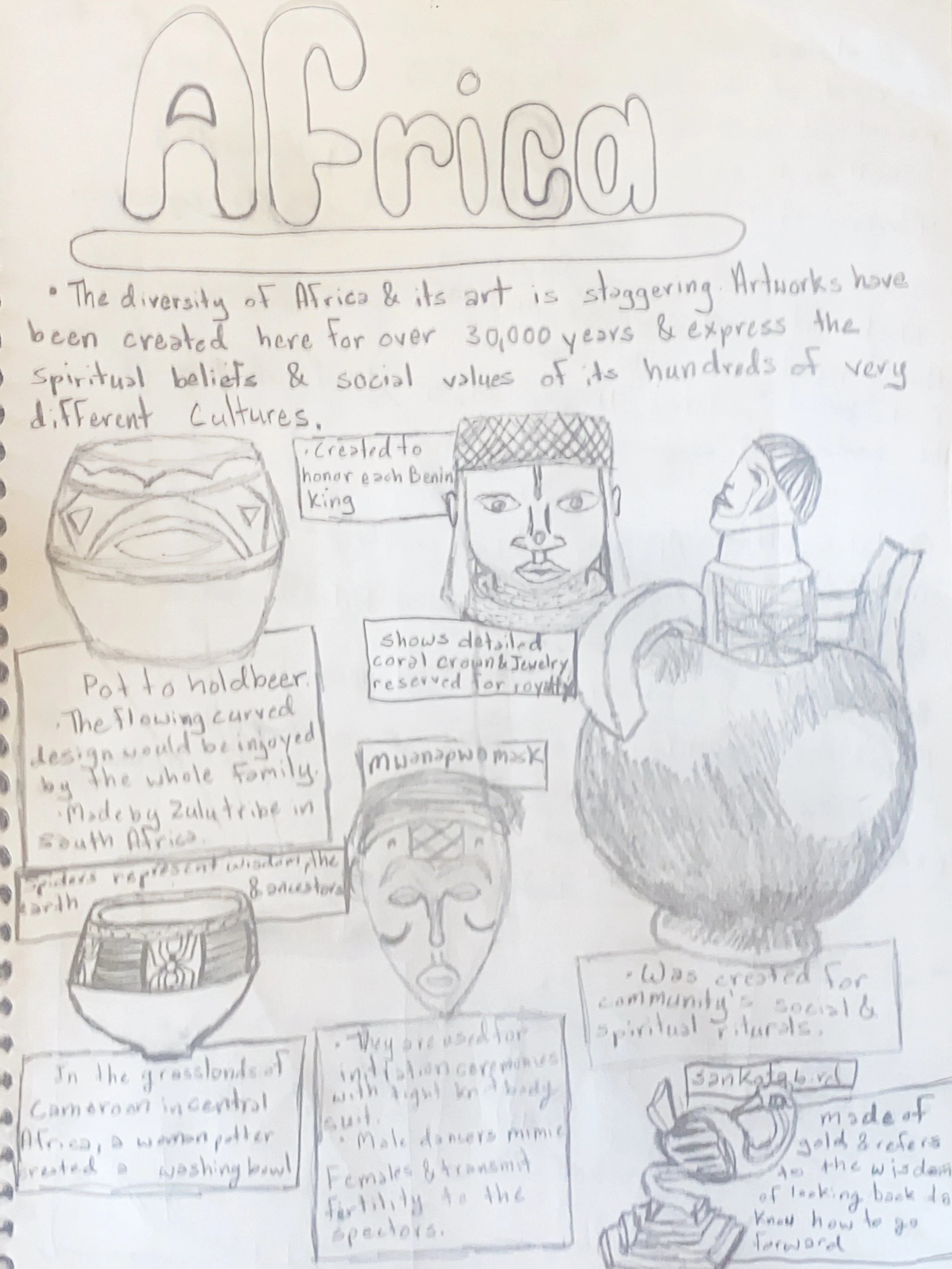
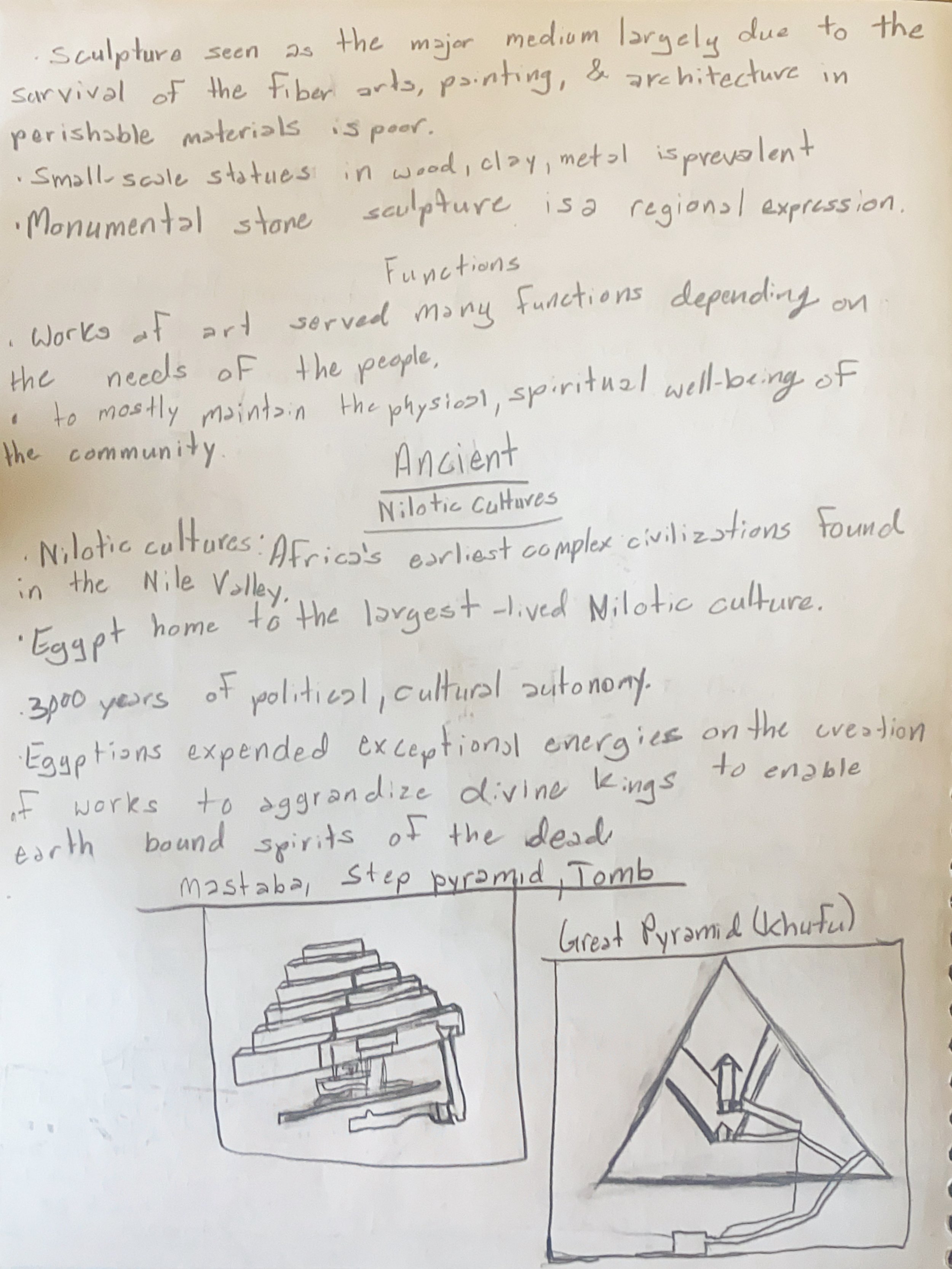
Draw images of artworks discussed in class
Analyze patterns, textures, and stylistic features
Students are encouraged to combine written notes with visual sketches to strengthen understanding and engagement.
2. Visual Analysis
Students will examine images of:
Nok terracotta heads and figures
Ancient African pottery
Ceremonial sculptures and artifacts
Class discussions will focus on:
Facial expressions and stylized forms
Texture and patterns
Symbolic meaning
Materials and craftsmanship
3. Observational Drawing
Students will create drawings in their sketchbooks inspired by ancient African artwork. Drawings should include:
Geometric facial features
Decorative patterns and texture
Symbolic details
Shading and line work
Students may use colored pencils or markers to enhance their drawings.
4. Mini Art Projects
At the end of each time period or culture studied, students will complete a small hands-on art project inspired by the artwork discussed in class.
Possible mini projects include:
Clay relief carvings inspired by Nok sculptures
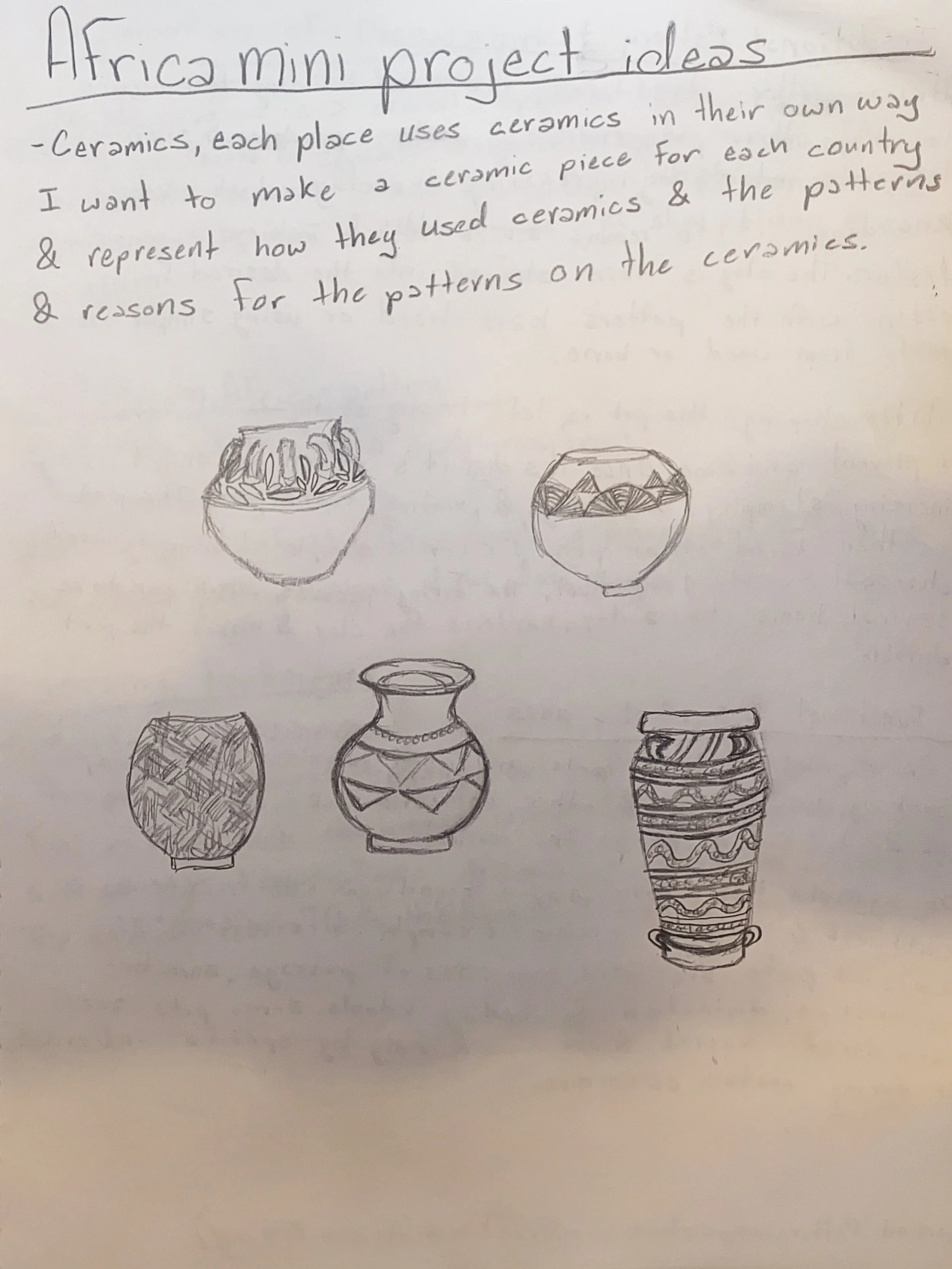
Patterned ceramic designs
Symbolic mask drawings
Textured paper sculptures
Decorative pottery sketches
Projects will reinforce artistic techniques, symbolism, and historical understanding.
Learning Outcomes
By the end of the lesson/unit, students will be able to:
Identify characteristics of African art from 500 BC–200 AD
Describe the Nok civilization and its artistic contributions
Analyze symbolism and artistic techniques in African artwork
Use sketchbook journaling to document art history learning
Create drawings and mini projects inspired by ancient African art traditions
Recognize the importance of African art within world and Western art history
Assessment
Students will be assessed on:
Completion and organization of sketchbook journals
Participation in discussions and visual analysis
Quality and effort in drawings and mini projects
Understanding of historical context and vocabulary
Creativity and craftsmanship